
Brand Imagery: Five Questions Worth Asking
Brand imagery shapes buyer perception. Here are the five questions to ask before approving any photo, video, or graphic.
October 12, 2026

Key takeaways
Imagery is the input, image is the output. The pictures, video, and charts you publish are the one part of brand perception you can actually control. How the buyer feels about you afterward isn't.
A first impression forms in milliseconds, not minutes. By the time a prospect reads your headline, they've already decided whether your company looks credible, based on the imagery alone.
Consistency matters more than quality. A polished homepage photo next to a mismatched sales deck chart raises questions buyers don't say out loud. They just look elsewhere.
Brand imagery is a critical part of an organization’s brand identity, yet it is tricky to govern. During our audits, we often find that the brand imagery used across the company’s website, social media channels, sales decks, and other assets, looks like a random collection of images with no guiding principles. This is true even when companies have written brand guidelines.
The truth is, opinion drives brand imagery choices more than strategy, the target audience, or competitor comparisons. And most businesses don’t consider how to measure the impact of the brand’s imagery across marketing channels.
However, prospective customers develop a perception of the brand before they read a word of the website’s copy. In other words, if you get the imagery wrong, you're fighting an uphill battle.
In this post, you'll learn:

Is Inconsistent Branding Hurting Your Revenue Growth?
Is inconsistent branding keeping your company from growing? Find out how brand inconsistency can confuse customers and harm your company's reputation.
Types of brand imagery
Take Stripe's website as an example. The use of soft gradients, abstract shapes, and a shade of purple that often shows up in software brand websites.

Mailchimp is another distinct brand that uses images of small business owners and a bright yellow accent for calls-to-action. You won’t see this imagery used by an enterprise software company

These choices are not an accident. They illustrate brand imagery.
Companies use a full set of visual elements to show up in the world. Examples are photography, illustration, video, and charts.
The logo is part of that set, but it gets too much credit, despite being the most prominent piece of the visual brand. A logo is a fixed mark, but brand imagery is everything else around it, including the landing image on the homepage, a chart in the sales deck, the video on the About page, or the screenshot in the case study.
Typography and brand imagery work together. One conveys meaning in form and color, the other through shape and rhythm of language. When they're in harmony, they reinforce a single impression. However, when they're mismatched, they create dissonance, even if each element is well-executed on its own. For example, a serif font may look fantastic, but if it doesn't make sense for the brand's personality, it could be a poor choice.
Brand image is not the same as imagery. Image is the customer’s perception of your product or service quality and how you compare to competitors once all those pictures have done their work.
Imagery is the input, a brand's image is the output.
The difference is critical because it separates what you can control from what you can't. You can't dictate how a buyer feels about your business, but can influence the visual representation, the photography, illustration, or video, that builds perception.
Confuse image with imagery and everything begins to look disjointed.
Why the stakes are higher than most executives think
In 2014, MIT researcher Mary Potter found that people assess an image in about 13 milliseconds. This reinforces the importance of proper imagery. However, the process becomes more complex once you add a personality framework on top of that. At The Brand Auditors, we use the DISC personality profiles to develop brand and marketing messaging.
For example, a busy executive with a D-type personality scans your homepage and quickly asks: Does this company look like it can be trusted or not? On the other hand, a more methodical buyer (perhaps a C-type personality) uses a different thinking process. She downloads three vendor decks and examines them side by side. Any decks with disjointed imagery found on the website and sales documentation may case her to question the credibility of the content. As a result, she decides to look for alternatives.
Many leadership teams don’t realize that imagery plays just as much of a role in your content as the words on the page.

Ask these questions before you approve a single image
Without written guidelines that include a plan for brand imagery, the selection process similar to guesswork. So, before a photo, video, or illustration is approved, marketing leaders should be able to answer these questions:
-
What three words describe the brand persona that will attract your next ten prospects?
-
What perception or feeling should a first-time visitor get about the business immediately after landing on your site?
-
Which competitor do you want to avoid looking like?
-
Does the image help differentiate your company or does it look just like the ones used by other competitors?
-
Can you justify the selection based on written brand imagery guidelines, or is it just a gut decision?
-
Most companies can answer the first question. However, few can answer the last one. This is where brand drift begins.
Where each type of imagery justifies its cost
Stock photography is cheap and easily accessible. But keep in mind that your competitors have the same stock image library open on their computer browser. Some stock photography is fine, but too much of it makes the website look generic.
Screenshots show users your product is real. Keep screenshots at full resolution instead of over-compressing for a fast upload. Charts and data visuals carry more weight in business-to-business (B2B) services than almost any other image you can use because a chart proves the claim is measured and not an opinion.
Custom photography and illustration have a higher upfront cost, but the payoff is also greater. Competitors cannot copy them. For that reason, custom images help mid-market companies differentiate from competitors selling the same product or service.
Video is mandatory in most industries now. So, it must follow the same visual style as everything else you publish.
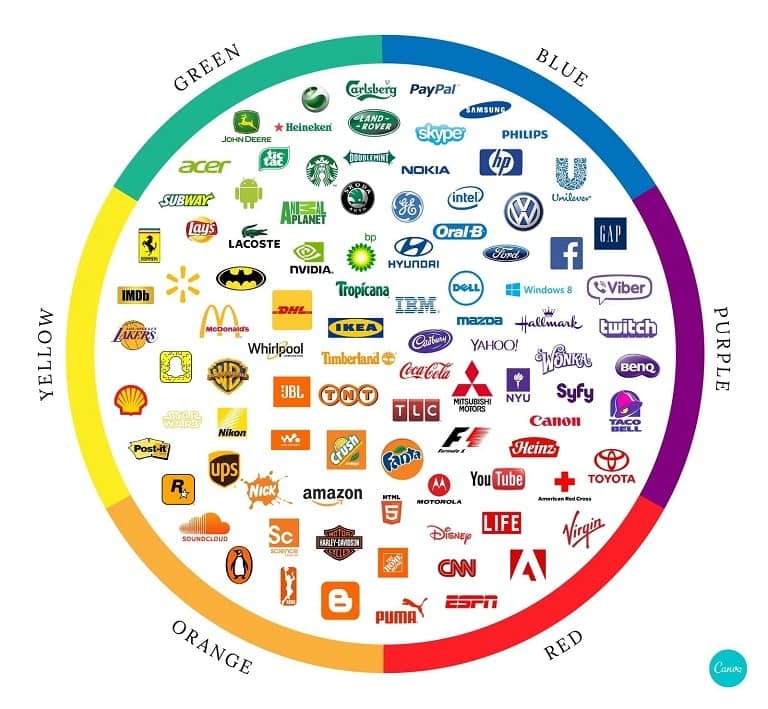
The use of color in brand imagery
There is a debate around the use of color in marketing. Can a color palette really influence a buyer’s decision?
One study found that people reach a verdict on a product within about 90 seconds, and that color alone makes up as much as 90 percent of that first impression.
A second study found the color itself matters less than whether it fits the brand. A red logo isn't stronger than a blue one. The real impact is based on whether red or blue matches the buyer’s expectations of the business type. As an example, blue is associated with trust, which is why it is a popular pick for businesses. It is also why you don’t see doctors wearing orange. Choosing a color that contrasts with the customer’s expectations will likely push them away from your brand, even if they can’t explain why.
Gender and nationality matter too. More women tend to notice color than men. A color that represents calmness in one culture may have a different meaning in another. Use brand colors that align with target audience research and customer sentiment analysis, not your personal preferences.
One other note on color: A single distinct color positioned against a field of sameness pulls the eye toward it. That's why a bright call-to-action button on a plain page gets clicked more often than one buried in a busy palette.
The importance of channel consistency
Undocumented guidelines are not enforceable. Instead, they are a memory, and memories leave the company when the design team lead leaves.
Create a guide that stipulates what the imagery’s purpose is, including color treatment, photography style, minimum resolution, approved and banned assets. Keeping the document short and to the point ensure that the guidelines will be practical and applied consistently.
Then, file approved photos, videos, and illustrations in a shared imagery library. Avoid scattering them across a dozen laptop files and email threads. An agency working on your account six months from now should be able to open that library and match the imagery without a single phone call.
Consistency should be enforced everywhere. The photo on your homepage, the chart in your sales deck, and the picture on your LinkedIn page all need to look like the same company made them. A buyer who sees one style of imagery on your site and a different one in your proposal starts asking questions you don't want them to ask.
What is a reasonable budget for brand imagery?
There's no single number, but a similar budget framework works for most mid-market B2B budgets. Allocate more dollars on the small collection of photos and videos that are used most. Examples are the homepage, sales deck, and case studies.
Spend less on one-off, lower-stakes images like a blog post header. One strong photography campaign reused fifty times during a year beats fifty different stock licenses used once each.
If a photo, illustration, or video only ever gets used one time, determine whether the cost was justified before ordering the next one.
How to measure the impact of brand imagery
Here are three checks you can make to ensure that all investments in brand imagery are justified.
- Consistency check. Pull the most recent customer-facing images (approximately twenty) and assess whether they successfully create differentiation or look like a competitor.
- Time-on-page check. Check Google Analytics to see how long visitors stay on your site and how far down the page they scroll. Check this on pages with custom imagery and to those pages without stock photos. Is there a difference in time-on-the-page?
- Recall check. Add a question to customer satisfaction surveys to ask them what they remember most about your brand identity.
Brand imagery is a business decision with a cost, a payoff, and a way to check the payoff.

POST AUTHOR
Related Content

Conducting a Brand Standards Audit to Ensure Consistency
Conducting a brand standards audit ensures consistency. Perform a brand audit to evaluate your brand. Improve adherence with brand standards audits.

The Nuances of Premium Brand Design
Explore the nuances of premium brand design beyond the logo. Discover how the elements of design impact a premium brand image for a product or service.

Perform a Visual Audit to Differentiate Your Brand
Elevate your brand’s visual strategy with a thorough visual audit. Our blog offers insights on how to improve your brand’s visual identity.